
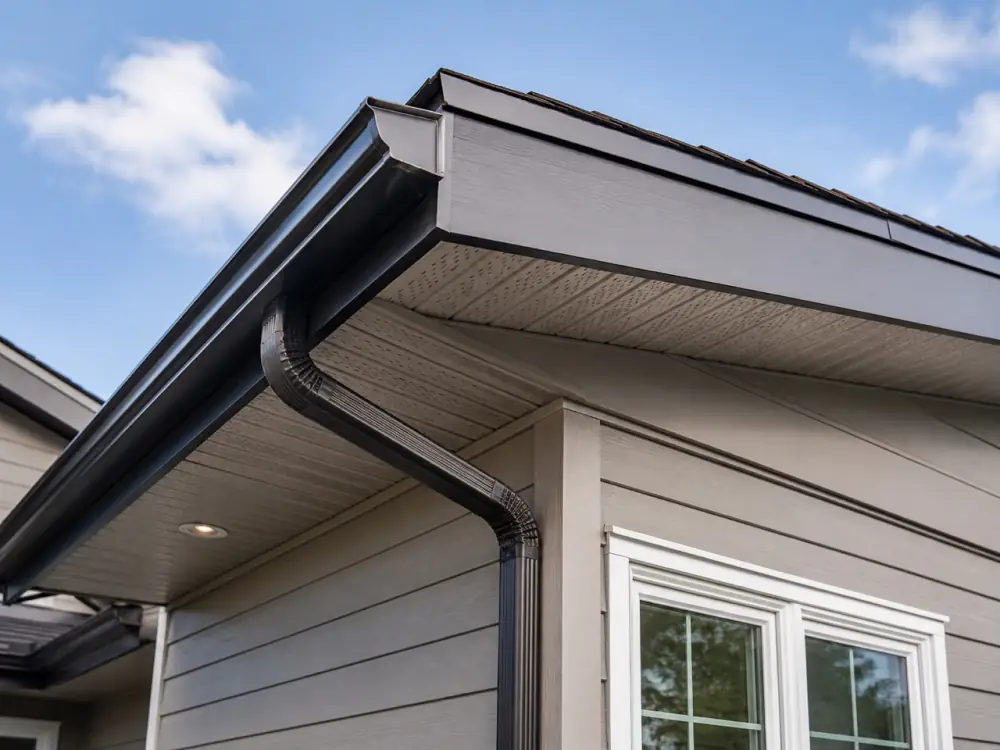
A new roof does not automatically call for new eavestroughs. If the existing runs are secure, drain properly and leave the roof edge accessible for the planned work, ask the contractor whether they can stay. If they sag, overflow, have damaged attachment points or hide deteriorated fascia, the roof visit is a sensible time to price that work too. The decision should come from an inspection and a written scope, not the age of the shingles alone.
W Contracting Roofing handles roof replacement as well as eavestrough, soffit and fascia work in the Saskatoon area. That makes it possible to discuss the roof and its drainage at one inspection. It does not mean every quote should include every part.
Begin at the roof edge
Water leaves the shingles at the eave. The eavestrough catches it; the downspout carries it away. Fascia closes the roof edge and supports the eavestrough. Soffit closes the underside and is part of the attic ventilation path. These pieces meet in a small space, which is why a roof quote can reveal a question the homeowner had not thought to ask.
Walk the perimeter from the ground before the inspection. Note where a run pulls away, where water escapes over a corner, and where the downspout releases it. If you have photos from a recent rain, bring them. Do not climb a ladder to collect evidence for a quote.
An overflow does not, by itself, prove the whole system needs replacing. It tells the roofer where to look. A loose section, poor drainage and damage at the fascia are different scopes, and a written estimate should say which one it addresses.
Ask what the roof work touches
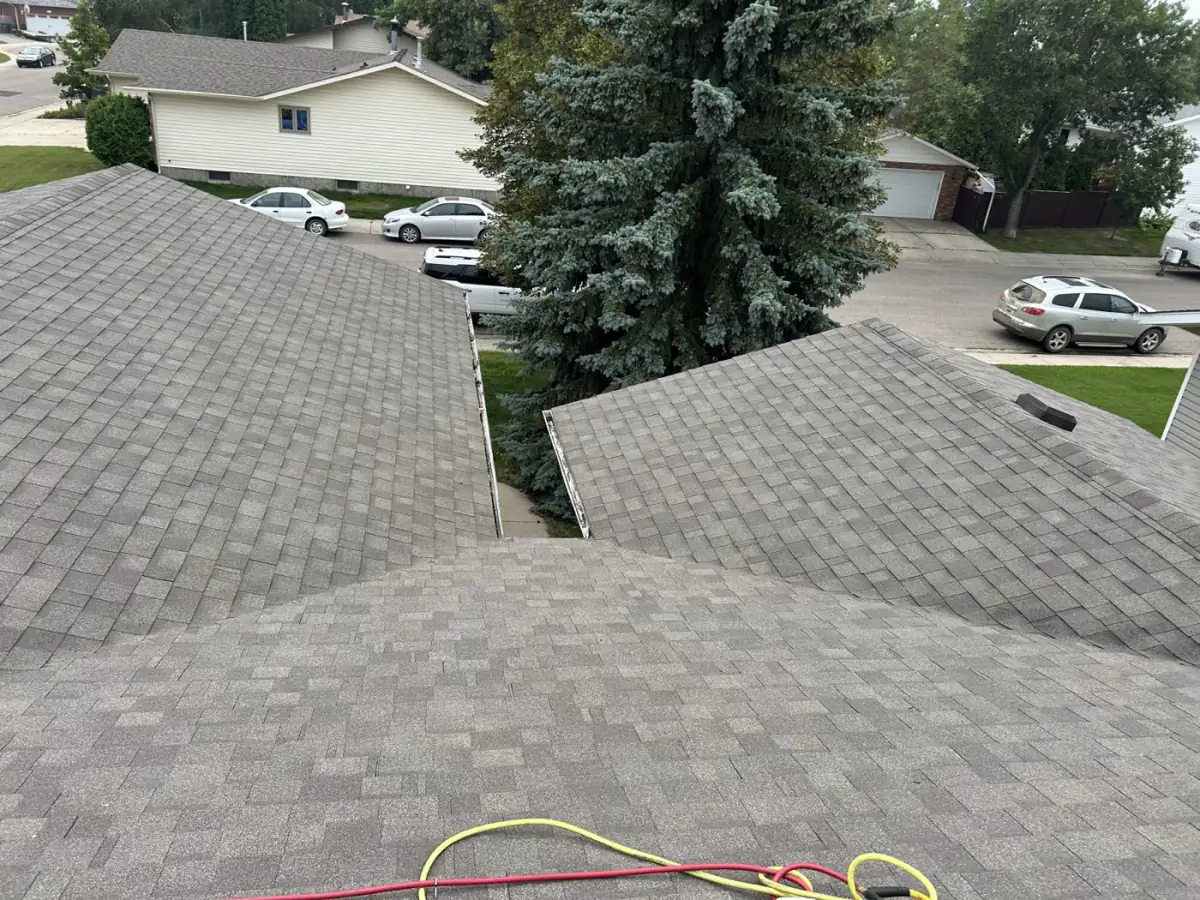
On a re-roof, the crew may need access to the drip edge and the material beneath the first course of shingles. Ask whether any existing eavestrough section must be loosened or removed to do that work. If it does, the estimate should say who handles removal and reattachment and what happens if the fascia behind it is unsound.
Do not assume an eavestrough replacement is included because the quote says “roof replacement.” The reverse is true too: a new eavestrough quote does not automatically include repairs to roof decking or shingles. The detail matters most where old material is hidden until work starts.
Use the quote to settle three decisions
| Question for the inspection | What the written scope should clarify |
|---|---|
| Can the current eavestroughs stay? | Which runs stay, and whether any must be detached and reattached |
| Is the fascia sound where the trough attaches? | Whether visible repair is included and how concealed damage will be handled |
| Where will the water go? | The planned downspout position and any drainage correction being quoted |
The table is a conversation guide. It is not a diagnosis of your house. A photo of the same corner during rainfall can be more useful than a broad statement that “the gutters are bad.”
If the roofer recommends replacing a run, ask why that run rather than the entire perimeter. If all the runs are being replaced, ask which observed problems support that larger scope. Clear answers make it easier to compare quotes later. Once the scope is set, our guide to roof replacement day in Saskatoon covers what to clear before the crew arrives.
Keep the roof and drainage scopes distinct
W Contracting says it begins with a free, no-obligation inspection and supplies a written quote. At that visit, point out the troublesome corners and ask for the roof work and any eavestrough or fascia work to be identified separately. You can then decide what to do now and what, if anything, can wait.
For a broader list of warning signs, see W Contracting's existing guide to eavestrough replacement. Its eavestrough, soffit and fascia service page explains the work it offers. If a roof replacement is already being planned, send photos of the roof edge with your inspection request.