
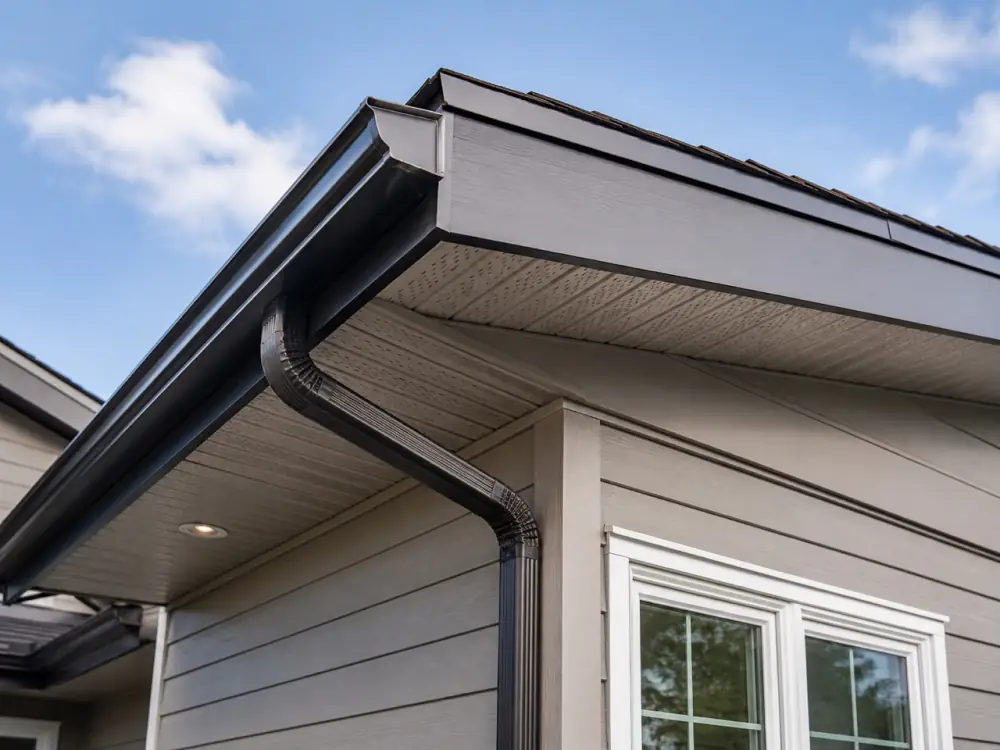
Soffit and fascia repair in Martensville comes down to two questions: is water getting in behind the roof edge, and can the attic still breathe through the soffit vents? The soffit is the panelling under the roof overhang, and on most houses it is where the attic draws in fresh air. The fascia is the board along the edge of the roof that the eavestroughs hang from. When either one fails, the damage rarely stays at the edge. It turns up later as rot in the roof deck, frost in the attic, or an eavestrough that comes down in the spring melt.
What soffit and fascia actually do
From the yard they look like trim, but both have a job. Soffit closes in the underside of the overhang. Vented soffit panels let outside air into the attic at the low end of the roof, and that air leaves through the vents near the peak. The air moving through keeps the attic dry in winter and keeps the shingles from cooking from underneath in summer.
Fascia closes in the edge of the roof and gives the eavestroughs something solid to fasten to. On a lot of houses the wood fascia board is wrapped in aluminum or vinyl, so the board behind it can rot for a long time while the outside still looks fine.
Signs your soffit or fascia needs repair
Walk around the house and look up along the eaves. These are the things worth a closer look:
- Soffit panels that sag, rattle in the wind or have slipped out of the channel that holds them.
- Gaps or holes in the soffit where birds, wasps or squirrels could get in.
- Fascia that bows, has peeling paint, or feels soft when you press on it from a ladder.
- An eavestrough that tilts away from the house, or hangers that have worked loose. The fascia behind it is often why.
- Dark streaks or water stains running down the fascia or the siding under it.
- Frost or damp on the underside of the roof deck near the eaves on a cold day, which can mean the soffit vents are blocked.
What causes soffit and fascia damage on Martensville homes
Most of it is water. An eavestrough that overflows in a heavy rain sends water over its back edge and down the fascia board instead of out the downspout. Ice building up along the eaves over the winter does the same thing more slowly, melting and refreezing against the edge of the roof.
Weather is the second cause. The climate section of Wikipedia's Saskatchewan article lists hail, strong winds and isolated tornadoes as common, and Martensville sits on open, flat ground about 18 km north of Saskatoon with little to slow the wind. Wind works soffit panels and fascia covers loose, and hail dents the aluminum.
The third cause is the house itself. Martensville only got water and sewer service in 1976 and most of its growth came after that, and the city grew another 9.3% in the five years to the 2021 census, to 10,549 people. On any newer house, two things are worth checking: whether the soffit panels are actually vented, and whether attic insulation has been packed against them so no air gets through.
Why a fascia problem is often a roof problem
Rotted fascia is usually where the damage ends up. Water gets in at the roof edge, often where a piece of flashing is missing or where ice has pushed water up under the shingles, and runs down into the fascia board and the end of the roof deck.
We saw how far that can go on a house a client had just bought. It had leaks in several places, and during the tear-off we found 4 spots where the previous contractor had missed a piece of flashing. The rot had reached the trusses, the sheathing, the fascia board and the insulation. New fascia on its own would not have stopped any of it.
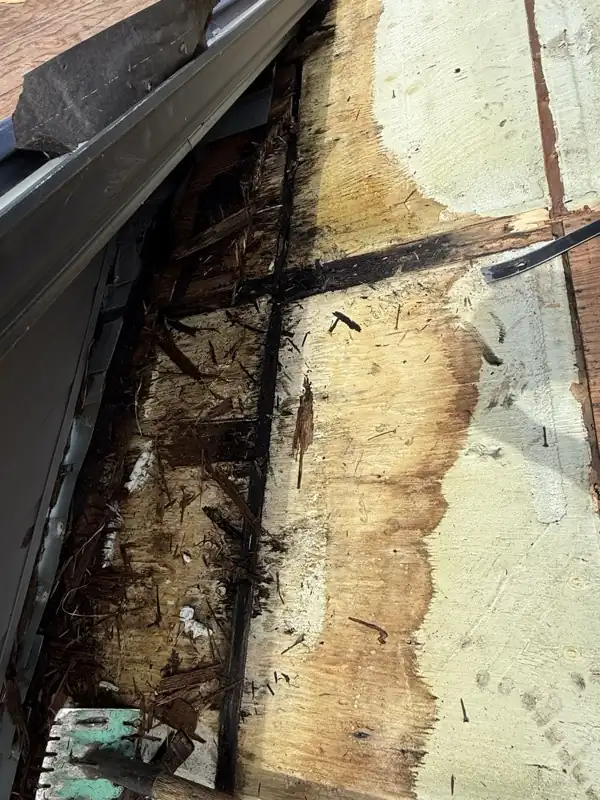
So when the fascia is soft, the useful question is where the water came from. If it came from the roof edge, that gets fixed first, then the fascia.
Repair or replace?
| What you find | Usually a repair | Usually a replacement |
|---|---|---|
| One loose or damaged soffit panel | Swap or reseat the panel | Panels failing all along a side of the house |
| Hail dents in aluminum soffit or fascia covers | Replace the dented pieces | Dents on many runs, or part of an insurance claim |
| Soft or rotted fascia board | A short section, once the water source is fixed | Rot along long runs or on several sides |
| Blocked soffit vents | Clear the vents and pull the insulation back | Solid soffit where the attic needs intake air |
| A new roof is coming | Do the roof edge in the same job |
We replace tired soffit and fascia when we re-roof or as a standalone job. If a new roof is already on your list, doing the roof edge at the same time means the eavestroughs only come down once. Our post on whether the eavestroughs should come off during a roof replacement covers that decision.
Check the soffit before winter
Fall is a good time to look, because whatever is wrong at the roof edge gets worse once ice starts building along the eaves. From the ground, look for sagging panels and gaps. In the attic, on a bright day, look toward the eaves. You should see vent baffles or a bit of daylight, not insulation packed tight against the roof deck. Frost or damp on the underside of the deck near the edge means the air isn't moving.
Clear the eavestroughs while you're at it, since a trough full of leaves is one of the easiest ways for water to end up behind the fascia. Our guide to preventing ice dams explains how the attic and the eaves work together in winter.
Is it a DIY job?
Reseating a loose soffit panel at single-storey height is something a handy homeowner can do from a sturdy ladder. Rotted wood, anything at the roof edge, and anything on a second storey is better left to a roofer, partly for safety and partly because the cause usually sits above the part you can see.
Getting it looked at
Our eavestroughs, soffit and fascia service covers the whole roof edge, and Martensville is part of our service area north of Saskatoon. Every job starts with a free, no-obligation inspection. We document what we find with photos and video, you get a written quote with the scope spelled out, and every roof we install carries a 10-year workmanship warranty.