
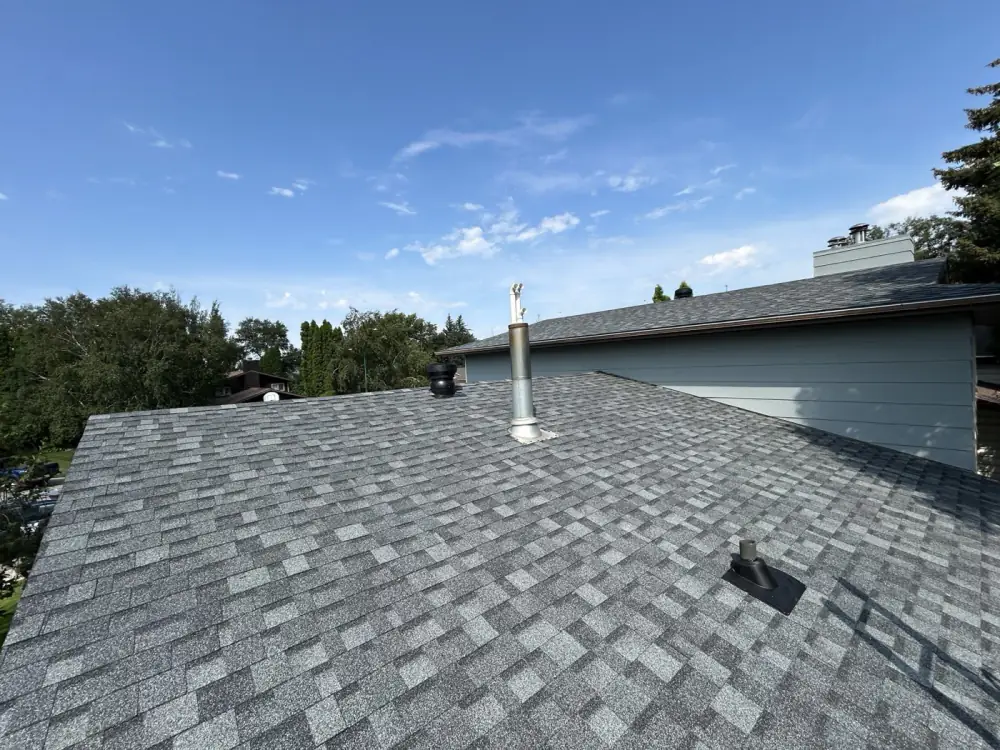
A roof replacement in Brighton, Saskatoon is rarely about age. On houses this new it is usually hail or wind. Brighton is one of the city's newest neighbourhoods, so most roofs there are still on their first set of shingles. When one does need replacing, the job is to put back a roof that suits the house, and in Brighton the City has written down what that looks like for new builds.
Brighton in brief
Brighton is in the Holmwood Sector on Saskatoon's east side, between College Drive to the north, 8th Street East to the south and McOrmond Drive to the east. The land was annexed from the RM of Corman Park in 2010, and construction started in 2016. Its Wikipedia entry describes it as the first of several communities planned for the Holmwood area.
That means the oldest houses in Brighton are around ten years old. An asphalt shingle roof in this climate usually lasts a good deal longer than that, so when a Brighton homeowner calls us about a new roof, the cause is usually a storm. Saskatoon gets severe summer thunderstorms with hail and plow winds, and a newer roof can be damaged badly enough for an insurer to replace it.
What the Brighton architectural controls say about roofs
The City of Saskatoon publishes architectural controls for Brighton, administered by Saskatoon Land. The page says the controls apply to all lots, regardless of dwelling style, phase or lot type. Most of the rules deal with siding, masonry and how house fronts are varied along a street, but a few speak directly to roofs.
Roof pitch follows the style of the house. The controls describe each architectural style, and several set out the roof that goes with it:
- Prairie: a low slope roof, for example a 4:12 pitch, with a large overhang.
- Arts and Crafts: typically a lower pitch, for example 5:12.
- French Country: steep hipped roofs, for example 8:12 to 12:12, with a modest overhang.
- Tudor: high-pitched gable roofs, with half-hips in the gables.
- Executive walkout lots in Phases 2A and 2B have no pitch requirement, but the pitch should complement the style of the house.
Flashing has to blend in. The controls say all flashing on the outside of the home, including on the roof, is to be prefinished to blend with the materials around it, and that galvanized metal flashing is not permitted on any part of the home visible from the street or lane.
Shingles are not counted as a material. The controls count exterior materials toward their requirements, and roof shingles, trim and parging are not counted. Colour in the controls is defined by the primary siding or masonry, not the roof.
Do the controls apply to a re-roof?
The controls are written around new construction: plan approval before a building permit, inspections during the build, and a final architectural inspection. The page doesn't say how they apply when a homeowner replaces a roof years after moving in. If you are changing anything about how the roof looks, such as the pitch, the overhang or the colour of the metal trim, the safe step is to ask Saskatoon Land first. Their number on the City's page is 306-975-LAND.
A like-for-like replacement keeps the question simple. The pitch, overhang and roof lines stay as they are, and only the roofing materials are new.
Keeping a new roof matched to the house
On most Brighton replacements the parts that take the most care are the metal ones. The step flashing where a roof meets a wall, the flashing around vents and pipes, and the drip edge along the eaves all show from the street. Putting prefinished metal back in a colour that matches the trim keeps the house looking the way it was designed, and it lines up with what the controls say about flashing.
Newer houses also tend to have busier rooflines than older ones, with more valleys, more vents and walls that meet the roof partway up. Each of those joints is a spot where a careful install matters. Our guide to why roofs leak covers the joints that give the most trouble on newer homes.
Choosing shingles
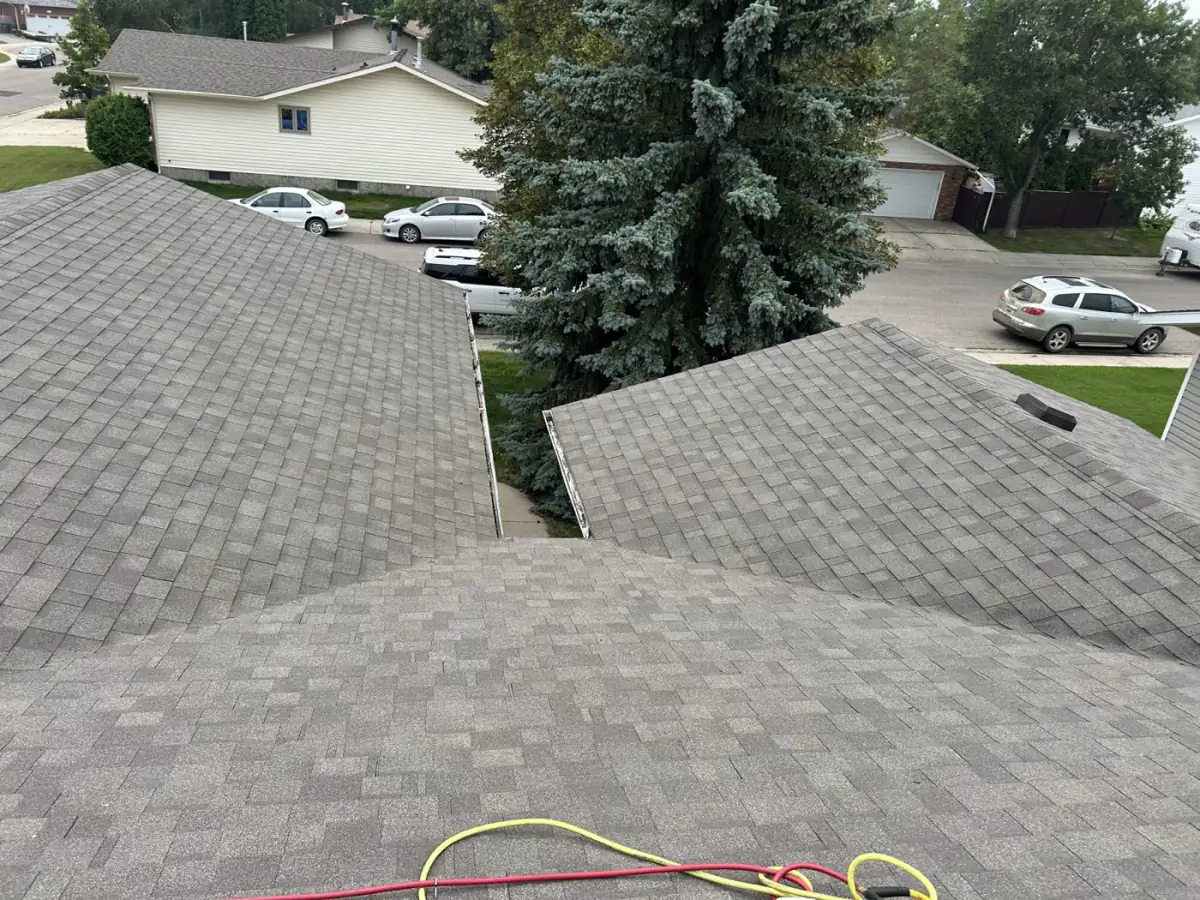
Since the controls don't set a roof colour, the shingle choice is about what suits the siding and stone on your house. The GAF Timberline HDZ is our workhorse shingle on most homes, and it carries strong wind and impact ratings for prairie weather. If your house is being re-roofed after an insurance claim, ask early whether the claim covers a like-for-like shingle so the colour choice fits inside it.
Ventilation on a newer house
A roof replacement is also the time to check the attic. Newer houses are built tight, so the moisture that gets into the attic has to leave through the vents. We check that the soffit vents are open and the roof vents are doing their job before the new shingles go on.
Getting a roof replacement quote in Brighton
Brighton is part of our Saskatoon service area, and our roof replacement service in Saskatoon covers asphalt shingles and metal. Every job starts with a free, no-obligation inspection. We document what we find with photos and video, and you get a written quote with the scope spelled out, including the flashing. Every roof we install carries a 10-year workmanship warranty, and financing through Financeit can spread the cost.