
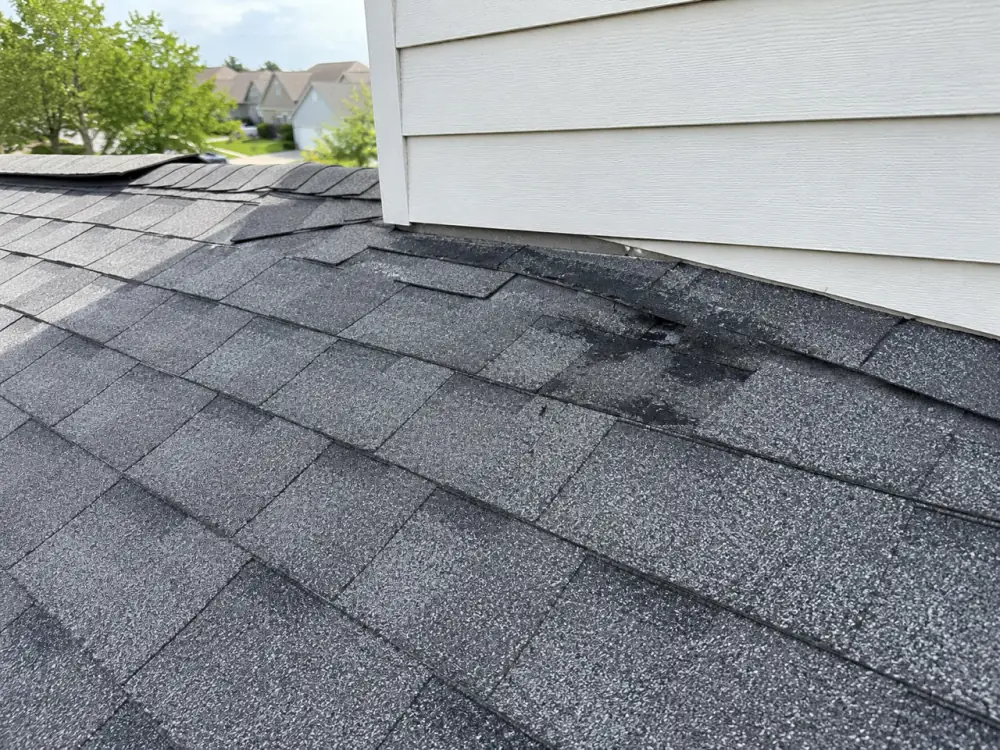
Maintaining an asphalt shingle roof in Saskatoon mostly means checking it, not working on it. Keep the eavestroughs clear, look the roof over from the ground every spring and after any hailstorm, check the attic for damp, and have a roofer look at the flashing, vents and valleys every year or two. The shingles don't need washing or a coating. Trouble usually starts with water sitting where it should run off, or damage nobody noticed until a ceiling stained.
What roof maintenance actually involves
Plenty of homeowners picture a crew up on the roof every summer. With asphalt shingles that's rarely needed. The job is mostly around the shingles: drainage, catching a lifted or missing shingle while it's still a small repair, and keeping the attic underneath dry and ventilated.
Binoculars from the yard and a flashlight in the attic cover most of it. The rest, the joints especially, is for a roofer.
Spring: look for what the winter left behind
Once the snow is off, walk around the house and look up. Missing, lifted or cracked shingles stand out, and so do shingles sitting at a different angle from the ones beside them. Check whether any eavestrough pulled away under the ice.
Look at the ground under the downspout outlets too, a heavy spill of granules there is worth mentioning when you call. Then go into the attic on a sunny day. Water stains on the underside of the roof deck, damp insulation or frost marks near the eaves can point to a problem you won't see from outside. If ice built up along your eaves over the winter, our guide to preventing ice dams in Saskatoon explains what causes it.
Summer: check after every hailstorm
Saskatoon gets severe summer thunderstorms, and hail is the one that matters for shingles. It can bruise a shingle and knock granules loose without leaving anything you'd notice from the yard. After a storm, look for dents in the eavestroughs, downspouts, vents and other soft metal, and take dated photos before anything is cleaned up.
Dents on the metal often mean the shingles took hits as well, and that's the time to book an inspection. We are HAAG Certified, so storm damage gets inspected the way an adjuster inspects it, and cosmetic marks get told apart from bruising that shortens a roof's life. Our storm and hail damage page covers how that works.
Fall: drainage and the attic before the snow
Get the leaves out of the eavestroughs, make sure every downspout runs free and trim back any branches rubbing on the shingles. The full list is in how to get your Saskatoon roof ready for winter.
Where shingle roofs usually fail first
The open middle of a roof plane rarely gives trouble. Leaks tend to start where shingles meet a wall, a chimney, a plumbing vent, a skylight or another roof plane in a valley, because those spots depend on flashing and on how carefully they were installed.
A repair we did in Hampton Village is a good example. The homeowner had a new roof put on by another contractor, and it started leaking about two months later. The valley had been installed incorrectly, so we redid the valley and installed step flashing along the fascia.
When a roofer is up for an inspection, ask them to look at the flashing where the roof meets walls and chimneys, the rubber boots around the plumbing vents (they crack as they age in the sun), the valleys, and the first rows of shingles at the eaves where ice sits all winter.
A season-by-season checklist
| Season | What to check | From where |
|---|---|---|
| Spring | Missing, lifted or cracked shingles; eavestroughs pulled loose by ice; granules at the downspouts | The ground and the attic |
| After a hailstorm | Dents in eavestroughs, vents and downspouts; dated photos | The ground |
| Fall | Clear eavestroughs and downspouts; trim branches; attic for damp or frost marks | The ground, a ladder at the eaves, the attic |
| Every year or two | Flashing, vent boots, valleys and the roof surface up close | A roofer on the roof |
If something on the list looks off, send us a photo or give us a call.
What not to do to a shingle roof
Pressure washing is the big one. The spray can strip the granules that protect the shingle from the sun.
Stay off the roof in cold weather, shingles get brittle and crack under a boot, and a fall is the bigger risk anyway. Chipping ice off with a shovel or hammer tears the shingles underneath. And a tube of caulking smeared over a flashing joint isn't a repair, it can hide a leak for a season and make the real problem harder to find.
When to call a roofer
Call if the ground check turns up a missing or lifted shingle, if the attic shows a stain or damp insulation, after a hailstorm that dented metal around the house, or if nobody has looked at the flashing in years.
Waiting gets expensive. A client called us about multiple leaks in a house they had just bought. During the tear-off we found 4 places where the previous contractor missed a piece of flashing, and the homeowner had to pay an additional $3,000 to fix rotted trusses, sheathing, fascia board and insulation.
Our roof repair service in Saskatoon starts with a free, no-obligation inspection. We get on the roof, document what we find with photos and video, and give you a straight assessment, including when nothing needs doing yet.