
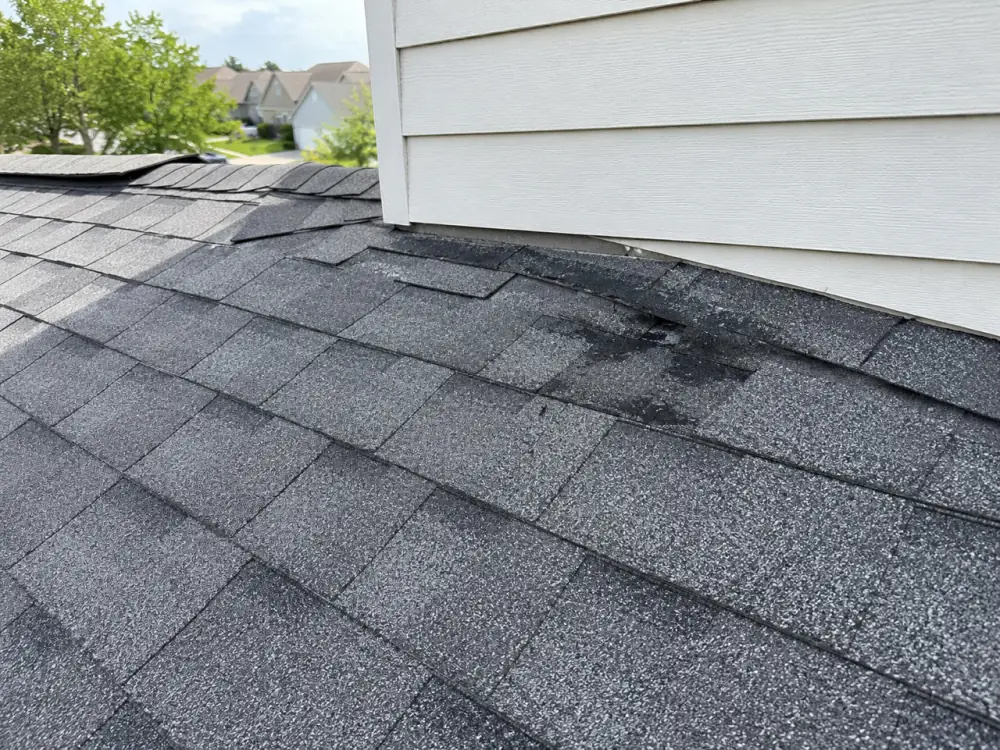
A prairie winter is unforgiving on a roof that is already tired. Snow load, ice dams and the constant freeze and thaw turn a small problem in September into a much larger one by March.
We are W Contracting Roofing, a Saskatoon roofing company, and these are the things we look for on a roof before freeze-up.
Here are seven signs a Saskatoon roof needs attention before the snow flies, and what each one usually means.
1. Shingles that are missing, cracked or curling
After years of prairie sun and wind, asphalt shingles dry out, curl at the edges and go brittle. A few missing or lifted shingles leave the layer underneath exposed, and that is exactly where wind-driven snow works its way in. Curling also stops shingles from shedding water the way they are meant to, so it is worth acting on even before one blows off.
2. Granules collecting in your eavestroughs
The gritty, sand-like granules on a shingle are its armour and its sunscreen against the prairie sun. When you find piles of them in the eavestroughs or washed out at the bottom of a downspout, the shingles are wearing thin and losing that protection. It is one of the earliest signs a roof is heading toward the end of its life, long before a leak shows up inside.
3. Dark stains or a sag on the ceiling
A brown ring on the ceiling, a soft damp patch, or a section of drywall that has started to sag all point to water that is already getting past the roof, the kind of leak a January or February thaw often brings out. Because water runs along the framing before it drips, the stain is rarely right under the leak, which is why it pays to have someone trace it back to the source rather than patch the drywall and hope. If you are trying to tell whether a mark on the ceiling is a roof leak at all, our guide to reading a ceiling water stain walks through it.
4. Daylight, damp or frost in the attic
On a bright day, a pinhole of daylight through the attic means a matching hole in the roof. In winter that same gap shows up as frost on the underside of the sheathing, which melts during a thaw and drips onto the insulation. Damp insulation loses its R-value and stays wet, so a small gap quietly turns into a bigger heat-loss and moisture problem.
5. Cracked or lifting flashing around chimneys and vents
Most roof leaks start not in the open field of shingles but at the flashing around a chimney, a vent stack or a skylight, where two surfaces meet. Flashing that has cracked, pulled loose or lost its sealant is a common culprit, and caught early it is often a straightforward fix rather than a major repair.
6. Bald spots or bruising after a hailstorm
Saskatoon takes real hail. After a storm, look for shingles that are dented, bruised, or knocked bare of their granules.
Hail damage is not always obvious from the ground, and left alone it opens the shingle up to the first hard freeze of a prairie winter. If a storm has come through recently, our guide to what to do after a hail storm walks through the next steps.
7. A roof going into winter past its age
Asphalt shingles in this climate generally last somewhere between twenty and thirty years, and the prairie extremes tend to push that toward the shorter end. If your roof is near that age and showing any of the signs above, another freeze-thaw winter is hard on it. It is far better to know where you stand before the snow than to find out during a January leak.
What to do if you spot any of these
Noticing one or two of these does not always mean a full replacement. Many are a targeted roof repair, such as new flashing, a section of shingles, or a resealed vent boot. The reason to look now is to catch the small fixes while they are still small, before the freeze and thaw turn them into an interior repair by March.
Check from the ground, not the roof. On a dry, bright day in September or October, most of these signs are visible with a pair of binoculars from the yard, from inside the attic with a flashlight, or at the eavestroughs.
A wet or frosty roof is dangerous, and a free inspection is both safer and more thorough. If water is already coming in, our emergency roof leak steps cover the first hour.
Eavestroughs count too
Do not forget the eavestroughs while you are at it. Clogged or sagging eavestroughs, soffit and fascia send meltwater back under the shingles and feed the ice dams that cause winter leaks, so clearing them is part of getting a roof ready for the season.
A walk-around you can do in one fall afternoon
Pick a dry, bright day in September or October, before the snow sticks in Saskatoon. Grab your phone and a flashlight, plus binoculars if you have them, and go in this order.
- Start in the yard. Walk right around the house and look at each slope of the roof, since missing tabs and curled edges are often easier to spot from across the street than from under the eaves.
- Check the eavestroughs from an upstairs window or a ladder that is set up safely. Look for granules, bits of shingle, sagging runs and downspouts packed with leaves.
- Look at everything that comes through the roof: the chimney, plumbing vents, exhaust vents and any skylight. Gaps, rust, lifted metal and cracked sealant are what you are after.
- Go up into the attic. Switch the flashlight off for a minute to look for daylight, then switch it on and check the wood for dark marks and the insulation for wet or flattened spots. Rusty nail tips mean moisture has been collecting up there.
- Walk the top floor and look at the ceilings, closets included.
- Finish outside at the soffit and fascia. Peeling paint, stains or soft wood there can mean water is getting in behind the eavestroughs.
Write down what you find and take a photo of each spot. If you would rather hand the whole job off, our Saskatoon roofing crew can check all of it during a free inspection, and we can start with the spots you already found.
How these signs show up as the seasons change
The same problem can look quite different in September than it does in February. Here is what to watch for through a Saskatoon year.
Older roofs and newer roofs wear out differently
The age of the roof changes what we look for. With shingles here lasting roughly twenty to thirty years, a house much older than that is probably not on its first roof.
On an older roof
On an older roof, the signs above tend to show up together. Curling, bare spots and granule loss across a whole slope usually mean years of prairie sun and wind have worn the shingles out, not just damaged them in one spot.
Ask whether there is more than one layer of shingles up there. A second layer laid over the first adds weight and can hide soft or rotten roof boards underneath, which matters once a replacement is on the table. Our page on roof replacement in Saskatoon covers that job.
On a newer roof
When a newer roof shows one of these signs, the cause is usually something specific like storm damage, a flashing detail or a vent boot, not age. Nail heads pushing up through the shingles and single shingles lifting in the wind are common examples.
Before you call anyone, find the paperwork from the install so you know what coverage you already have, and if we installed it, it carries a 10-year workmanship warranty through GAF.
What to photograph for your records or an insurance claim
Photos taken before anyone starts work are the best record you will have. Take them from the ground and from inside the house, and never climb onto a wet or icy roof to get a better shot.
- A wide shot of each side of the house, so the whole roof shows.
- Zoomed-in shots of any missing, cracked or dented shingles.
- Granules in the eavestroughs or at the bottom of a downspout.
- Dents in metal vents, eavestroughs and downspouts after hail, since soft metal holds the marks well.
- Every ceiling stain, plus a second photo a week later to show whether it is growing.
- The attic: damp insulation, stains on the wood and any frost.
Write down the date of the storm if there was one. Environment Canada's Saskatoon forecast page shows any weather alerts in effect and links to past weather data for the city, which can help you pin down the day.
When we come out, we document the damage with our own photos and video and share them with you. If a storm caused it, our page on roof insurance claims in Saskatoon explains how we help with the claim, including meeting your adjuster on site when that helps.
Questions to ask before anyone gets on your roof
A good inspection should leave you knowing what is wrong and what it will take to fix. These questions help, with us or with any other roofer.
- Will you show me photos or video of what you found?
- Is this a repair, or is the roof close to the end of its life, and how can you tell?
- Can the work be done before winter? If it has to wait for spring, how will the roof be protected until then?
- What warranty comes with the work?
- Are there payment options if it turns into a bigger job?
Our inspection is free and you will see the photos. If a larger job makes sense, you can look at financing through Financeit. For more on picking a roofer, read our guide on how to choose a roofing company in Saskatoon.