
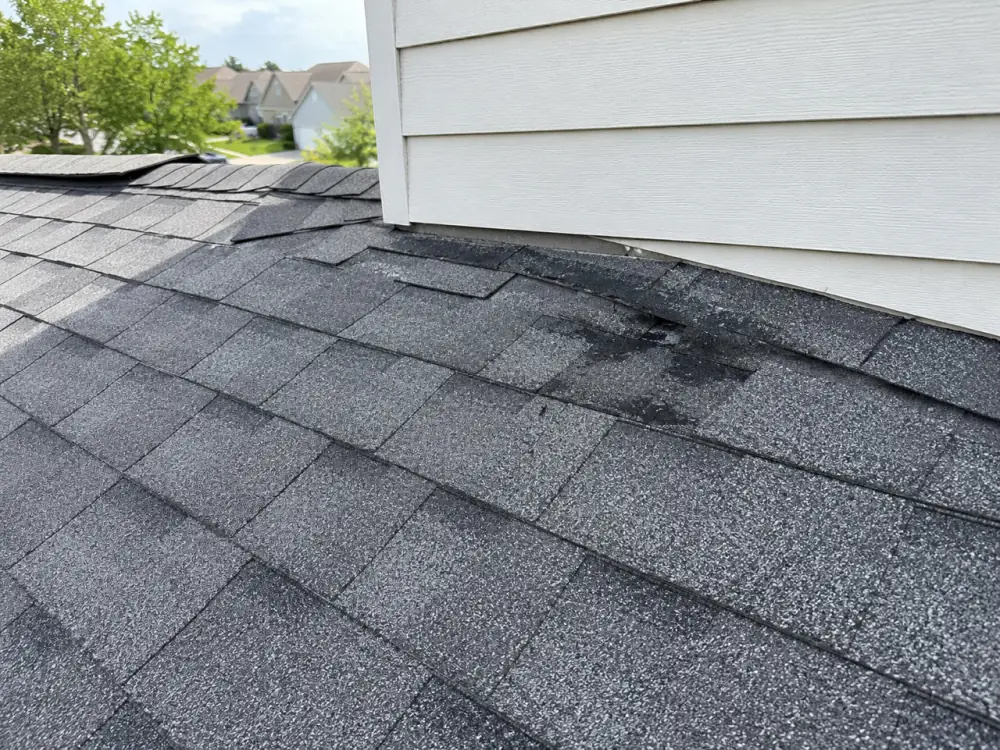
When hail wrecks a roof in Saskatchewan, the repair usually runs through an insurance claim rather than your own pocket. The process is where homeowners get stuck.
We are W Contracting Roofing, a Saskatoon roofing company, and insurance work is part of what we do.
This is how a hail claim works here, step by step, plus the common mistakes that cost people time and money. Treat it as general guidance, not a substitute for reading your own policy.
First, is your hail damage actually covered?
In most cases, yes. Home insurance in Saskatchewan is written either through SGI or through a private insurer, and a standard home policy generally covers sudden, accidental damage from a storm, with hail and high wind included. A roof that quietly wore out over the years is a different story and usually is not covered.
With SGI or a private insurer alike, coverage comes down to how your own policy is written, so the honest first step is to read it or ask your broker. For the full picture on what does and does not qualify, see does insurance cover hail damage to your roof.
Document the damage before you touch anything
Photograph the damage you can safely see and note the storm date before any repair, even a temporary one, because an undocumented fix can look like a pre-existing problem later. If water is getting inside, it is fine to catch it with a bucket and move valuables, just take a photo first.
Good documentation at this stage, with the Environment Canada record of the storm, is what ties your damage to a specific weather event, and that link is one of the first things an adjuster checks.
The photo set your insurer will want
A couple of shots from the corner of the yard rarely show the whole roof. A fuller set, taken the same day from the ground, makes your Saskatoon claim easier to follow. Aim for these:
- Each side of the house from the yard, wide enough to show the roof slope and the wall under it.
- Close-ups of dented eavestroughs, downspouts, roof vents and flashing you can see from the ground, with a coin or tape measure in the frame.
- Anything else outside that took hits, like siding, window screens, the deck or a fence.
- Inside: ceiling stains, drips, and wet insulation in the attic if you can get up there safely.
- Any tarp or bucket, before and after it goes in place.
Keep the original files, uncropped and unfiltered, because the date your phone saved is part of the record. Email them to yourself or back them up the same day.
Pin down the storm date with Environment Canada records
If you are not sure which night the hail came, look it up. Environment and Climate Change Canada keeps a public historical weather data search where you can find a Saskatoon weather station by name and pull the records for the days around your storm.
Save a copy with your claim notes. It helps most when the damage only gets noticed weeks after the storm.
Get a professional inspection and a written scope
Before you call your insurer, get a roofer on the roof who can tell storm bruising from ordinary wear. A HAAG Certified inspection produces the kind of documented scope an adjuster recognizes, and it tells you whether the damage is even worth a claim against your deductible. At W Contracting we do these inspections free and give you the photos and video to back them up.
Going into a claim with an independent, documented scope means the conversation with the adjuster is about facts, not opinions.
What to have ready before you call your insurer
The first call goes faster when everything sits in one folder. Before you pick up the phone, pull together:
- Your policy number and the name of your insurer or broker
- The storm date, and roughly what time it hit, with the Environment Canada record if you pulled one
- Your photos
- Your roofer's inspection report and written scope, if you have it by then
- Receipts and a short note for any temporary repair, like a tarp
Open the claim with your insurer or broker
Call your insurer or broker to open the claim, with your storm date and documentation in hand. They will give you a claim number and tell you what they need next, usually an adjuster visit. Whether your policy is with SGI or a private insurer, ask about your deductible and your claim window while you have them on the phone.
Keep a simple record of who you spoke to and when. A short log of calls and emails keeps the claim moving and saves you repeating yourself later.
Meet the adjuster with your documentation ready
The adjuster comes out to assess the damage and decide what the insurer will approve. Having your own HAAG Certified inspection and photos ready means nothing gets missed, and it is often helpful to have your roofer present to walk through the storm damage together. The goal is an approved scope that matches what is actually on the roof.
If the adjuster and your roofer see the roof differently, documented evidence is how that gets resolved fairly.
Questions to ask your adjuster or broker
Insurance wording can be hard to follow, and nobody expects a Saskatoon homeowner to know every term. A few plain questions early save a lot of back and forth later:
- Is there a separate deductible for wind or hail on my policy?
- Does my policy pay replacement cost or actual cash value on the roof?
- Is there a deadline to report the damage, or to finish the repairs?
- How do you want a temporary repair documented and billed?
- Are the eavestroughs, siding and other outside damage part of this claim?
- Will I get the approved scope in writing?
Write the answers down with the date and the name of the person you spoke to. That goes in the same log as your calls and emails.
Understand your deductible and the approved scope
Once the claim is approved, you will know two numbers that matter: the approved scope of work and your deductible, which is the part you pay. Your deductible is set by your policy, not by the roofer, and we never quote or guess it. What we do is make sure the approved scope reflects the real, storm-caused damage our HAAG Certified inspection documented, so nothing needed gets left off.
Read the approved scope against your inspection. If something documented is missing, that is worth raising before the work starts.
When you and the adjuster see the roof differently
Start with the paperwork: ask for the reasons in writing, lay them next to your inspection photos, and ask your insurer how to have the decision reviewed. We can go through our photos and notes with you and your adjuster.
Saskatchewan's Financial and Consumer Affairs Authority says on its insurance complaints page that it is best to try to resolve a problem directly with the insurance company first. The same page notes that Saskatchewan laws set limitation periods for starting court action, so if a dispute drags on, talk to a lawyer about those time limits.
Paying your share, and upgrading while you're at it
Your share of a hail claim is usually the deductible, plus anything you add on top of the approved scope, like a different shingle line or a switch to metal. Ask your insurer how they handle upgrades before you pick materials.
For the part you pay yourself, we offer roof financing through Financeit.
Choose your own roofer and get the work done
You choose the contractor. An insurer might suggest a preferred vendor, but the decision is yours, so pick a roofer who does the work properly and backs it with a real workmanship warranty.
We schedule the approved work, complete it to the documented scope, and handle the roofing side start to finish under our 10-year workmanship warranty through GAF. See storm and hail damage restoration for how the full job runs, and how we help with roof insurance claims for the paperwork side.
Once the roof is done, your roofer provides the final invoice and documentation your insurer needs to close the claim.
What you see from us during the job
We send photo and video updates while the crew works, so you can follow the job without climbing a ladder. When the roof is done, we do a final inspection before we call it finished.
Our workmanship is backed by a 10-year warranty through GAF, as a GAF Certified Plus contractor. Keep the warranty details in your claim file with the invoice.
Older roofs and newer roofs on a hail claim
Expect roof age to come up. On an older roof, the adjuster has to separate fresh hail hits from years of ordinary wear, like curled tabs, cracked shingles and bare patches. A documented HAAG Certified inspection helps here because it marks which damage is new and which was already there.
On a newer roof, where fresh bruises tend to stand out on shingles that still have most of their granules, keep your install invoice and any warranty papers, since they show how old the roof was and what shape it was in before the storm.
Either way, ask your broker how your policy treats an older roof, because a replacement cost policy and an actual cash value policy can pay out very differently on the same roof.
Hail damage beyond the shingles
Hail doesn't stop at the shingles, and it shows up differently on each kind of roof and on the metal around it.
- On a metal roof, the question is often whether the dents are only cosmetic or actually let water in. Policies can treat those two very differently, so ask before you assume either way.
- On a flat roof with EPDM rubber or torch-on, a puncture lets water sit and find a way in, so check the flat part of the house even when the shingled part looks fine.
- Eavestroughs, soffit and siding often take hits in the same storm. Photograph them with the roof and make sure they show up on the approved scope.
We handle eavestroughs, soffit and fascia and siding as well as roofing, so we can quote the outside of the house together with the roof.
Do you need a City of Saskatoon permit to redo a hail-damaged roof?
Often not. The City of Saskatoon's building permits page lists replacement or repair of roofing with exactly the same roofing material, above the decking, among the projects that do not need a building permit. The same page lists construction that increases the roof top loading as work that does need one.
If your claim turns into a change of material, say asphalt to metal, you are outside that exact-same-material line, so check with the City before the work starts. Outside Saskatoon, in Martensville, Warman or another town, check with that town's office.
When hail damage turns up late in the season
Some hail damage only gets noticed in the fall, when someone cleans the eavestroughs and finds a pile of granules, or a ceiling stain shows up after a cold rain.
Report it as soon as you find it, and give your insurer the storm date you think caused it. The Environment Canada records above can help you narrow that down.
If water is getting in and snow is on the way, ask your insurer about a temporary repair, photograph the damage first and keep the receipt. For a leak that can't wait, see our emergency roof repair in Saskatoon.
Mistakes that cost Saskatchewan homeowners on a hail claim
Waiting too long to act. Claim windows have limits and hail bruising worsens, so a delayed roof is both a bigger repair and a harder claim. Making DIY repairs before documenting the damage.
A patched leak can read as a pre-existing issue and complicate the claim. Taking the lowest bid on faith. Storm chasers roll through Saskatchewan after big hail events, and the cheapest quote often skips the documentation and the warranty that protect you.
The through-line on all of these is simple. Document first, work with a roofer who stands behind the job, and keep the claim grounded in what is actually on the roof.
Hail claim questions from Saskatchewan homeowners
How long do I have to file a hail damage claim in Saskatchewan?
Will filing a hail claim raise my premium?
Do I have to use the roofer my insurance company suggests?
Who pays the deductible on a hail claim?
You do: the deductible is the portion of the claim you agreed to cover when you set up your policy, and the amount is set by your policy, not by the roofer.
We do not quote or guess your deductible, but we document the real damage so the approved scope reflects the truth of what is on the roof.