
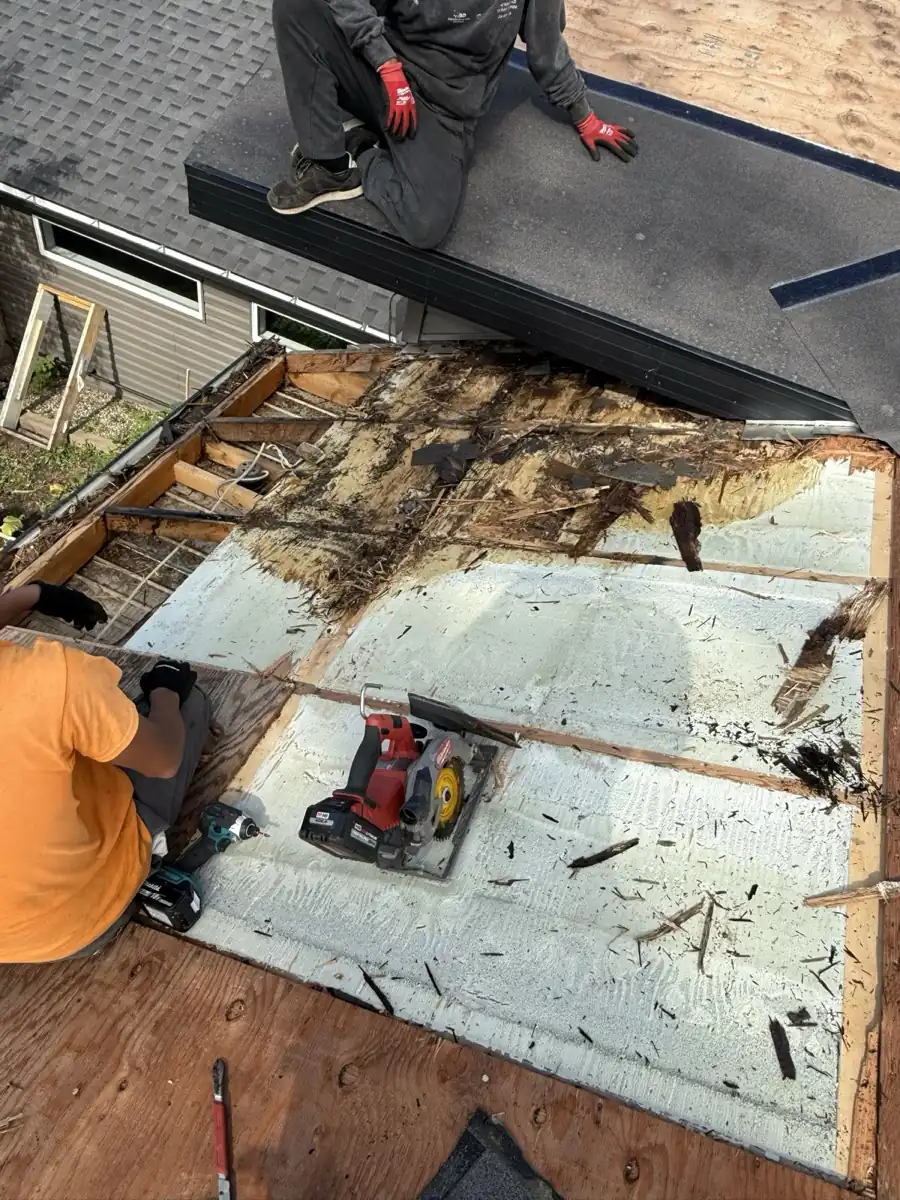
The first two come straight from those jobs, in Nathan's words. The rest are the joints and layers our own replacements are built around.
1. A valley put in wrong
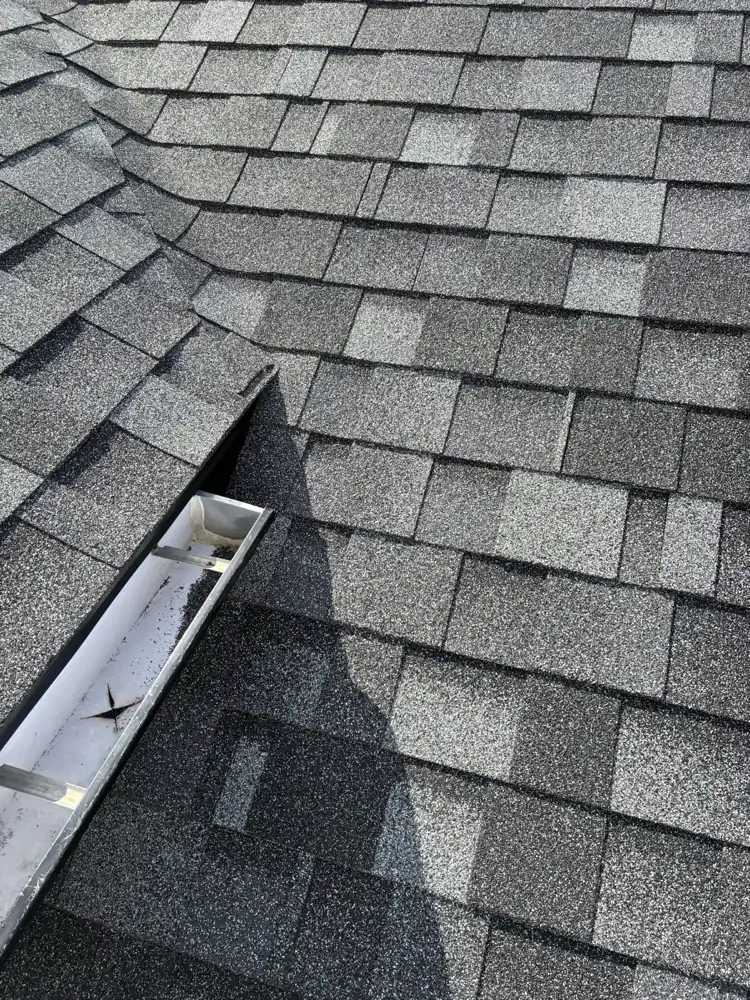
A homeowner in Saskatoon's Hampton Village had an ongoing leak that started only two months after their new roof was installed. The valley had been installed incorrectly. A valley is where two roof planes meet, and it carries far more water than the open field of the roof. It also holds snow and ice through a Saskatchewan winter. To fix it properly we redid the valley and installed step flashing along the fascia. Flashing is the metal that seals a joint where the roof meets something else.
2. One piece of flashing left out, four times
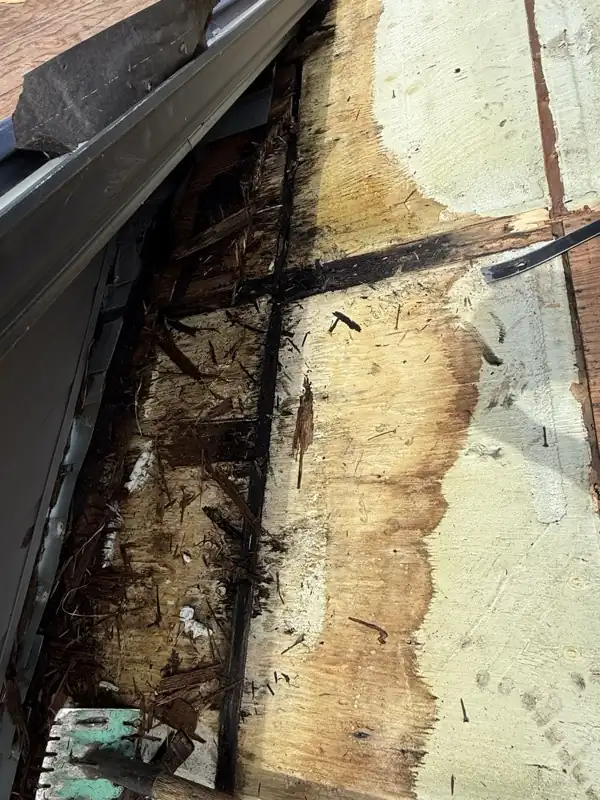
A client reported multiple leaks in a house they had just bought. During the demo of the roof we found four spots where the previous contractor had missed one piece of flashing. By then the water had rotted the trusses, the sheathing, the fascia board and the insulation, and all of that had to be fixed. In Nathan's words, "This shows how having under qualified workers can cost you in the long run."
3. Flashing at pipes, vents and walls
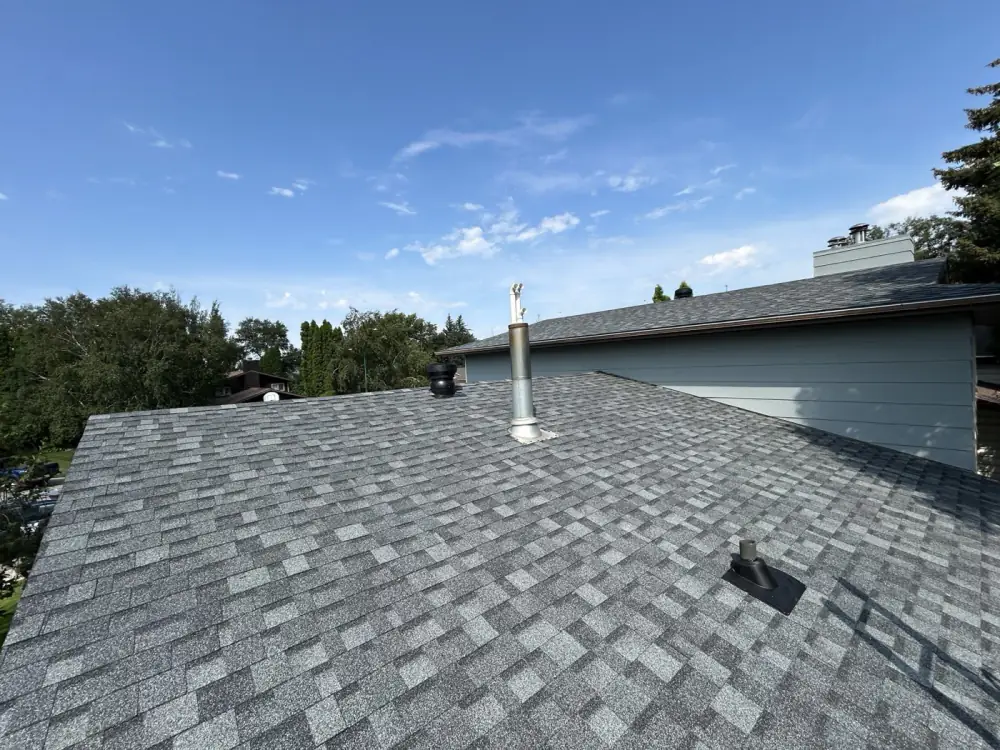
The step flashing where a roof meets a wall and the flashing around vents and pipes are the joints that take the most care on any install, and newer houses tend to have more of them, with busier rooflines, more vents and walls that meet the roof partway up. Pipes and vents are sealed with a rubber boot or a collar, and rubber doesn't last as long as the roof does. When a boot cracks, water runs down the pipe and often turns up as a stain in a bathroom or kitchen ceiling.
4. Eaves without ice and water shield
In a Saskatoon winter, heat from the house melts snow on the roof, the meltwater refreezes at the cold overhang, and the water backing up behind that ice gets pushed up under the shingles. That's an ice dam. On a replacement we strip to the deck and rebuild with drip edge, ice and water shield at the eaves and full underlayment, because the eaves are where that water ends up. Our guide on stopping ice dams covers the rest.
5. An attic that doesn't breathe
A poorly vented attic traps moisture under the roof deck over the winter and lets the shingles run hot in the summer. Some of what looks like a leak in January is frost in the attic melting off the nail tips, which new shingles won't fix. A flashlight in the attic on a cold day will show it as frost on the nail tips coming through the deck. We check the soffit vents and roof vents before a new roof goes on.
6. A third layer of shingles
Most roofs aren't meant to carry a third layer, so a roof that already has two usually points to a full tear-off rather than another layer on top. It's one of the first things we check on older homes, the kind you find in Nutana or Caswell Hill, because they've had more chances to be re-roofed over the top.
7. Shingles over gapped board decking
Older Saskatoon houses can sit on board decking with gaps between the boards instead of plywood sheets. New shingles want a solid, even base, and a repair on top can't fix the base under the rest of the roof. Our post on whether to repair or replace your roof goes into both of these.
If you think yours was installed wrong
Take photos from the ground or from inside, of any ceiling stain, the attic if you can get in safely, any granules or shingle pieces in the eavestroughs, and each side of the roof. Paperwork from the last roof job helps too, because it tells us when the shingles went on. Then book an inspection. We trace the leak back to whatever let the water in, document it with photos and video, and give you a written quote. Our guide to why roofs leak covers the causes that have nothing to do with the install.
Nathan put the lesson from the Hampton Village job this way: "When getting a new roof, there is nothing more important than the warranties and reputation of the company upholding it." Every roof we install carries a 10-year workmanship warranty. Call (306) 620-9709, or see our Saskatoon roofing page for the rest of what we do in town.