
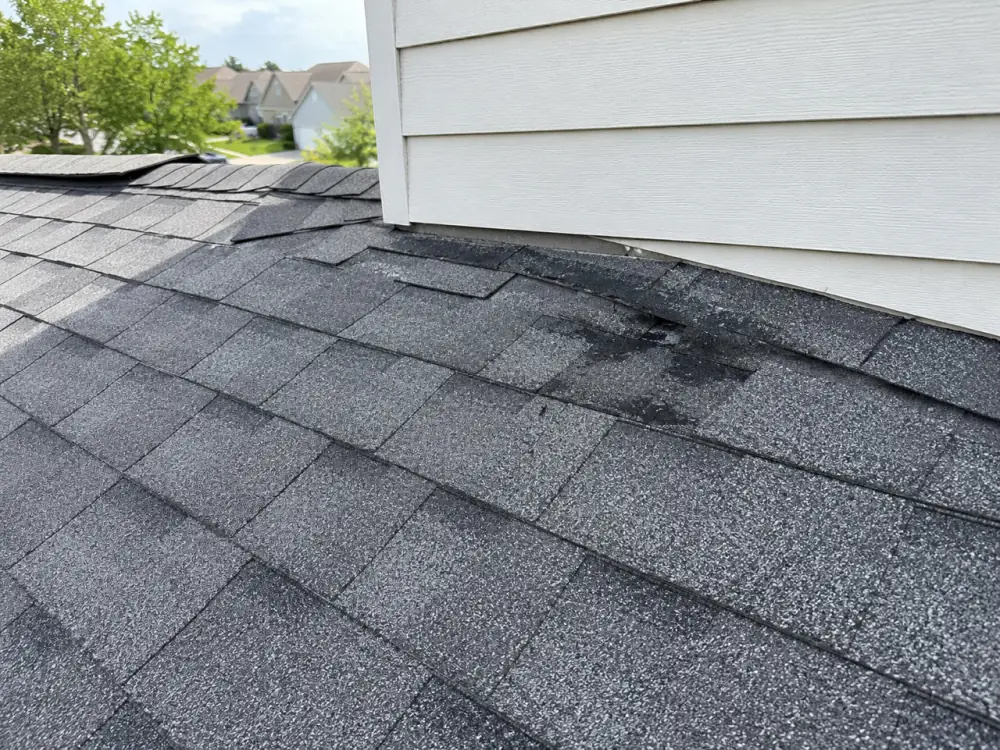
When a roof starts giving trouble, the real question is whether a targeted fix will do or whether the roof has reached the end of its life. Here is how we work through that decision on a Saskatoon home, so you can weigh it before anyone gets on the roof.
We are W Contracting Roofing, a Saskatoon roofing company, and this is the decision a roof inspection is meant to settle.
A repair and a replacement are very different decisions, and the right one depends on more than the problem in front of you. These are the things we look at, roughly in order, when a homeowner asks which way to go.
Start with the age of the roof
Age frames everything else. Asphalt shingles in this climate generally last twenty to thirty years, with the prairie sun, wind and freeze-thaw pushing toward the shorter end.
A leak on a roof that is eight years old is almost always a repair. The same leak on a roof past twenty is a sign the whole surface is wearing out, and money spent patching it is often money you spend again next season.
How much of the roof is affected
A problem in one spot is different from a problem all over. A section of lifted shingles, a length of failed flashing or a single storm-struck slope is a contained repair.
When the prairie sun and freeze-thaw have worn the whole roof, with curling shingles here, bare patches there and granules gone in several places, you are no longer fixing a fault, you are chasing a roof that is giving out. At that point a replacement usually costs less over time than a series of repairs.
How many layers are already up there
If the roof already carries two layers of shingles, your options narrow. Most roofs are not meant to hold a third layer, so a worn double-layer roof generally points to a full tear-off and replacement rather than another patch. It is one of the first things we check, especially on older homes in Nutana or Caswell Hill, because it changes the conversation.
Older Saskatoon homes and newer builds
The house itself changes the answer. An older home in Nutana or Caswell Hill has had more chances to be re-roofed over the top, and it may sit on board decking instead of plywood sheets.
On an older house, these are the things that tend to push the call toward replacement:
- A second layer of shingles already in place, so the next job has to be a tear-off.
- Board decking with gaps between the boards. New shingles want a solid, even base like the sheathing newer builds in Evergreen or Brighton usually have, and a repair cannot fix the base under the rest of the roof.
- Flashing at the chimney and walls that is as old as the house and has been sealed over more than once.
- An attic that was never vented for how roofs are built now. Poor airflow can bake shingles from below in summer and helps ice dams form in a Saskatoon winter.
Newer builds in areas like Evergreen or Brighton usually have one layer of shingles on solid sheathing. On those roofs a leak or a torn section is most often a straightforward roof repair in Saskatoon, unless hail has worked over the whole surface. A leak at a vent or skylight on a newer house is usually a flashing or seal problem, not a worn-out roof.
A pattern of repeated repairs
One repair is normal. A third or fourth call for a new leak in a different spot is the roof telling you something.
When the fixes are stacking up and moving around the roof, the cost of chasing them starts to rival the cost of replacing the surface once, with a 10-year workmanship warranty behind it. We will tell you honestly when you have reached that point instead of selling you another patch.
The condition of the decking underneath
The wood decking under the shingles is the part homeowners never see, and on older homes in Nutana or Caswell Hill it may be boards rather than plywood sheets. Where an old leak has soaked the decking and left it soft or rotten, a surface repair does not solve the problem, because the base it fastens to is failing.
Widespread soft decking is a strong sign for replacement, and we check it during an inspection and, when needed, once the shingles are off.
When a storm makes the decision for you
Saskatoon hail can settle the question on its own. A severe storm can bruise shingles and strip their granules across the whole roof, which is replacement territory, and it is often an insurance matter rather than an out-of-pocket one. Our storm and hail damage page and the insurance claim guide cover how that path works when a storm is the cause.
What each season changes in Saskatoon
The season rarely decides repair or replace on its own. It changes how much of the roof you can see and how soon the work should happen.
- In winter, snow hides most of the roof. A leak that shows up in January usually needs a temporary fix to stop the water, and the bigger decision waits until the roof can be seen clearly.
- Spring thaw is when weak spots start to leak. New ceiling stains in March or April are worth a look before storm season.
- Summer brings the hail. One bad storm can turn a repair question into a replacement, and often a claim with your SGI or private adjuster.
- Fall is the last stretch of good roofing weather before the snow. If your roof is borderline and you would rather not chase leaks all winter, this is the time to decide.
What to photograph before you call
Good photos help us understand the problem before we arrive, and they matter to your insurer if a storm is involved. Take them from the ground or from inside, and please stay off the roof.
- Any stain on a ceiling or wall, close up and from across the room, plus the date you first noticed it.
- The attic, if you can get in safely. Look for wet insulation, dark spots on the wood or daylight coming through.
- Grit, granules or shingle pieces in the eavestroughs and at the bottom of the downspouts.
- Each side of the roof from the yard, zoomed in on anything lifted, missing or dented.
- After hail, dents on eavestroughs, vents, siding or a vehicle that was parked outside, which help show your SGI or private adjuster that the storm reached your property.
- Any paperwork from the last roof job, like an old invoice or warranty card. It tells us when the shingles went on, which settles the age question fast.
Keep the original files so the dates stay attached. If it turns into a claim, our page on roof insurance claims in Saskatoon explains how we document the damage and work alongside your SGI or private adjuster.
The rule of thumb we actually use
If the roof is young, the damage is contained and the decking is sound, repair it and get years more out of it. If the roof is near or past its age, the wear is widespread, it is already double-layered or the decking is going, replacing it is the better value even though it is the larger job. Cost matters in that decision too, and how each option is priced is covered in our guide on what a new roof costs in Saskatoon.
The surest way to know where your roof sits is a free inspection with photos, so you are deciding on evidence rather than a guess. If you are not sure the roof will make it to spring, our signs a roof needs repair before winter is a good next read.
Questions to ask at the inspection
Whoever inspects your roof, ask these. A roofer who has actually been up there should be able to show you each answer in a photo.
- About how old is the roof, and what tells you that?
- Is the damage in one area or spread across the whole roof?
- How many layers are on it now?
- Did you find soft or stained decking, and where?
- Can a repair be matched to my shingles, or will it show?
- If you are recommending a replacement, why is a repair the wrong call on this roof?
- What warranty comes with the work, and who stands behind it?
On our inspections we document what we find with photos and video, then give you a written quote. We are HAAG Certified for storm damage inspections and GAF Certified Plus, and our installs carry a 10-year workmanship warranty through GAF.
If the answers point to a new roof, our roof replacement in Saskatoon page walks through how that job runs, from the free inspection to the final cleanup. Financing through Financeit is available if the timing is tight.
Do you need a City permit?
For most straight re-roofs in Saskatoon, no. The City of Saskatoon building permits page lists repair or replacement of roofing with exactly the same roofing material above the decking among the projects that do not need a permit.
A switch in material, such as asphalt shingles to metal, is not on that list, and structural repairs are on the list of work that does need a permit. If your job changes material or turns structural, check with the City's Building Standards team before work starts. Outside Saskatoon, check with your own town or RM. If metal is on the table, our page on metal roofing in Saskatoon covers how we install it.
Repair or replace questions from Saskatoon homeowners
Is it cheaper to repair or replace a roof?
A repair almost always costs less in the moment. Whether it is cheaper over time depends on the roof.
On a young roof with contained damage, such as a newer build in Evergreen or Brighton, a repair is the clear value. On an old or widely worn roof, repeated repairs can add up to more than a single replacement, so the cheaper choice is not always the smaller one.
Can you repair just part of a roof?
How many times can you repair a roof before replacing it?
How do I know if my roof decking is bad?
Will a repair blend in with my existing shingles?
Often, but not always. Shingles fade and weather under the prairie sun, so a new patch can be a shade off from the aged roof around it.
On a repair we match as closely as the available shingles allow. If an exact match matters to you, that is worth raising before the work, and it is one more thing that factors into repair versus replacement.