
A brown ring or a damp patch on the ceiling is your house telling you water is getting somewhere it should not, maybe through the roof and maybe not. Knowing which it is decides who you call and how fast, so here is how to read the stain before you assume the worst.
We are W Contracting Roofing, a Saskatoon roofing company, and a stain that turns out to be the roof is exactly the kind of thing a free inspection is meant to pin down.
The stain is a symptom, not a diagnosis, because water travels along framing before it drips and the mark on your ceiling can sit well away from the place the water came in. The first job is to work out the source, because the fix is completely different depending on what it is.
What a ceiling stain is actually telling you
A water stain means moisture has reached the drywall or plaster and dried, leaving the mineral ring behind. A fresh stain that is soft to the touch or spreading means water is still active.
An old, dry, unchanging stain may be from a problem that has already been dealt with, or one that only shows up in certain weather, like the spring thaw in March or April. Either way it is worth finding the cause, because the moisture that made the mark can also be feeding mould or softening the material behind it.
Reading the shape, the colour and the spot
Before anyone climbs anything, take a good look at the stain itself. Its shape and where it sits narrow things down more than most people expect.
- Rings inside rings, like tide lines, mean the spot has gotten wet, dried out and gotten wet again, which points to a leak that comes and goes with the weather, not a one-time spill.
- One dark patch that feels damp is usually water that is still arriving. If the drywall gives when you press it gently, or an old plaster ceiling in Nutana or City Park starts to bulge, the attic above it needs a look soon.
- Lots of small spots spread over a wide area are more typical of attic frost melting than of a single hole in the roof.
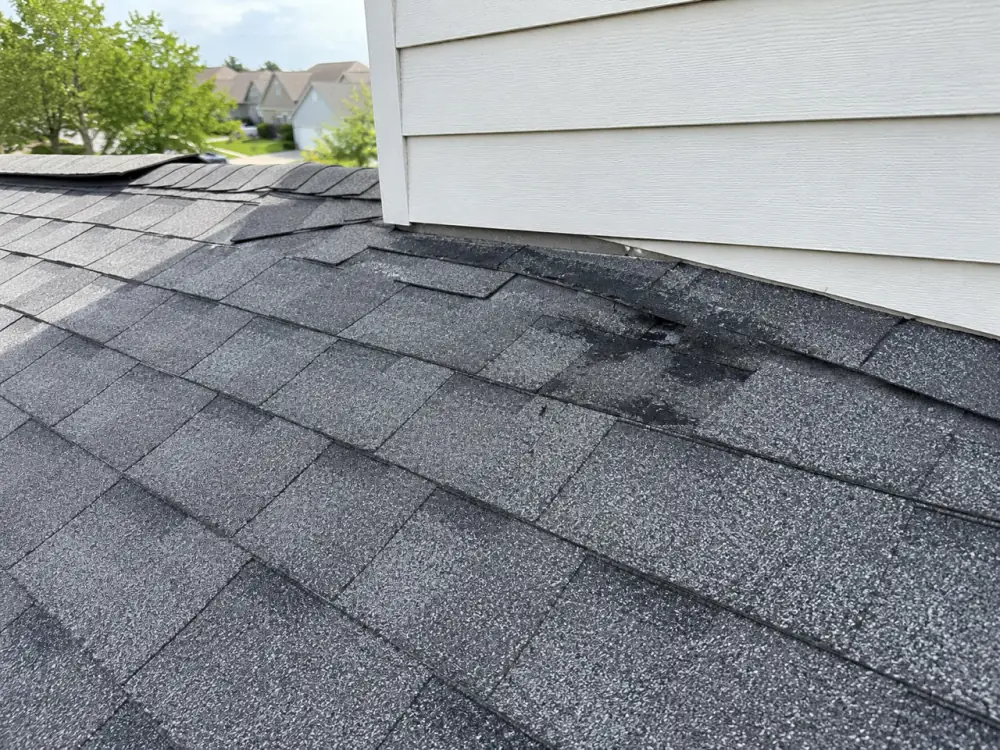
- Stains along an outside wall lean toward ice dams at the eaves, or the flashing where the roof meets a wall.
- A stain around a pot light or the bathroom fan often points to moist indoor air getting into the attic at that spot, not to the roof, especially in tight newer homes like those in Evergreen and Brighton.
- Under a chimney or a plumbing vent, suspect the flashing or the rubber vent boot first.
Roof leak, or something else
Three things cause most ceiling stains in a Saskatoon home. A roof leak lets outside water in through worn shingles, failed flashing or a cracked vent boot.
Attic condensation forms when warm indoor air meets cold surfaces in the attic through the long prairie winter and drips back down. And a plumbing line running above the ceiling can leak on its own, with nothing to do with the roof. Telling them apart is what points you to the right trade instead of the wrong one.
How to tell a roof leak from attic condensation
Timing is the clearest clue on the prairies. A stain that appears or grows during rain, or after snow melts on the roof, points to water coming in from outside.
A stain that shows up in the coldest stretch of winter, spreads over a wide area rather than a single point, or comes with frost or damp in the attic, points to condensation, which is an insulation and ventilation problem rather than a hole in the roof. Saskatoon's long, cold winters make condensation a genuinely common cause here, not a rare one.
What a ceiling stain looks like through a Saskatoon year
The season a stain first shows up is one of the better hints you have. On homes around Saskatoon and the towns nearby, it tends to follow the weather like this.
- Spring thaw: snow on the roof melts in the afternoon sun and refreezes at the cold eave overnight. The ice dam that builds there can push meltwater back up under the shingles, so a stain near an outside wall in March or April often traces back to one. Our guide on preventing ice dams in Saskatoon covers what fixes it.
- Summer storms: wind-driven rain and hail can lift or crack shingles and open a spot that stays dry until the next heavy downpour, so a stain that appears after a storm is worth a look even when the roof seems fine from the yard.
- Fall brings full eavestroughs that overflow behind the fascia, and the last hard rains before freeze-up.
- Winter: frost builds up on the underside of the roof boards through a long cold stretch of a Saskatoon winter, then melts all at once when it turns mild. The drips look exactly like a roof leak, but the shingles are usually fine and the problem is attic moisture.
Where the stain shows up is not where the leak is
This is the part that catches people out: water finds the low point of whatever it is running along, a rafter, the top edge of the drywall, a light fixture, and drips there, sometimes several feet from where it got in.
A stain in the middle of a room can trace back to flashing at the very edge of the roof. That is why following the stain rarely finds the source, and why our HAAG Certified inspection looks at the roof, the attic and the path between them.
Is a ceiling stain urgent
It depends on what the water is doing. An active drip, a bulging or sagging ceiling, or water near a light or an outlet is a call-now situation, and our guide on emergency roof leaks covers what to do in the moment.
A small, dry stain that is not changing is not an emergency, but it is a reason to book a look before the next storm or March thaw turns it into one. Leaving it alone is the one option that reliably costs more later.
What to do before the roofer arrives
If water is actively coming in, move what you can out from under it and put down a bucket, and if a bulge is holding water, letting it out through a small hole at the low point drains it in a controlled way instead of letting the ceiling give out on its own. Then leave the roof to a professional, because a Saskatoon roof is no place to be in wet or icy weather. Note when the stain appears and in what conditions, because that timeline is one of the most useful things you can hand an inspector.
A few lines in the notes app on your phone is plenty, so write down:
- the date you first saw the stain, with a photo of it that day
- what the weather was doing: rain, snowmelt in a March thaw, a hard freeze, or nothing at all
- whether it grows, or fades and then comes back in the same spot
If you are not sure what the weather did on a given day, Environment and Climate Change Canada keeps historical daily weather records you can search by station name.
Checking the attic yourself, safely
If your attic hatch is easy to reach, a quick look can tell you a lot. If it is wedged in a cramped closet or you are not steady on a ladder, skip it, since we check the attic during the inspection anyway.
- Go up on a dry day with a good flashlight and step only on the ceiling joists. The drywall between them will not hold your weight.
- Look at the underside of the roof boards above the stain for dark streaks or wet wood, and in a Saskatoon winter, frost and rusty nail tips.
- Check the insulation on top of the stain. Matted or damp insulation marks where the water landed.
- Look for daylight around vents and the chimney, and follow the bathroom fan duct to see if it actually leaves the house, since in tight newer homes in Evergreen and Brighton a fan venting into the attic can frost up the attic by midwinter.
- Take photos of anything you find, with the flashlight on it.
Some older homes have loose vermiculite insulation in the attic. Health Canada says vermiculite-based insulation may contain asbestos and advises not disturbing it, so if you see loose, pebbly fill up there, look from the hatch and leave it alone.
Older homes and newer homes leak differently
On older houses in neighbourhoods like Nutana or City Park, the usual suspects are the details that have aged, such as chimney flashing and worn vent boots, and sometimes a second layer of shingles laid over the first. Many of those attics also have less insulation and venting than a newer build, which gives condensation an easy start. Plaster ceilings can hold water for a while and then crack or bulge instead of staining neatly.
Newer homes in areas like Evergreen and Brighton, or the new builds out in Warman and Martensville, are built much tighter. That keeps heat in, but it keeps moisture in too, so a bathroom fan venting into the attic or an unsealed pot light can frost up the attic by midwinter. If the house is new enough to still be under a builder's or new home warranty, check that paperwork before you book any repair.
Finding the real source
Pinning down a ceiling stain means working from both sides, checking the attic for the trail of water and the roof for the entry point, then following the path between them. If it is the roof, a roof repair deals with the shingles, flashing or boot that let the water in, and if a storm was behind it, our storm and hail damage work and the guide on the common causes of roof leaks cover that path.
If it turns out to be condensation, which Saskatoon's long, cold winters make common, the fix is in the attic, in the ventilation and insulation and often the eavestroughs and soffit that feed it. A free inspection with photos tells you which, so you are not paying to fix the wrong thing.
What to photograph for your insurer
If the stain might be storm damage, good photos from the start make the claim easier to follow. Your insurer decides what is covered, so the goal is to show what happened and when.
- The stain twice: once from across the room so it is clear which room it is, and once up close with a tape measure beside it for scale.
- Any damaged belongings under it, before you move or throw them out.
- The attic above the stain, if you can get there safely, and only from the hatch if you see the loose vermiculite Health Canada advises not disturbing.
- The roof and eavestroughs from the ground, without climbing up for the shot.
- Receipts for anything you bought to stop the water, like buckets or a tarp.
When we inspect, we document what we find with photos and video, and on storm jobs we work alongside your SGI or private adjuster. Our page on roof insurance claims in Saskatoon walks through how that goes.
Questions to ask whoever inspects it
A ceiling stain is easy to misread, so it helps to know what to ask the person on your roof.
- Did you check the attic as well as the roof?
- Can you show me photos of where the water is getting in?
- Is this the roof, condensation or plumbing, and how sure are you?
- Is it a one-spot repair, or a sign the whole roof is near the end of its life?
- What warranty comes with the work, and who backs it?
We expect to be asked all of those. We are HAAG Certified for inspections and GAF Certified Plus, our GAF Certified installs carry a 10-year workmanship warranty through GAF, and every roof repair in Saskatoon we do starts with a free, no-obligation inspection and a written quote.
Ceiling stain questions from Saskatoon homeowners
Does a water stain on the ceiling always mean a roof leak?
Can attic condensation cause ceiling stains?
Is a small ceiling water stain an emergency?
Will a ceiling water stain go away on its own?
How do I know if the leak is coming from the roof or a pipe?
Can a bathroom fan cause a water stain on the ceiling?
Yes, if the fan duct ends in the attic or has come loose, warm steam from showers goes straight into a cold attic and freezes on the roof boards.
When it melts it drips back through the ceiling, often close to the bathroom, and the fix is to run the duct outside, not to repair the roof.